How this walk came to be — in Victoire's words.
Why build a walk about the Occupation at all?
Because it's one of the hardest chapters to tell well, and one of the most misunderstood. Most people imagine a city frozen in fear — ruins, barbed wire, checkpoints. The truth is stranger and far more human: life continued, but under a shadow. I wanted to give people that feeling, not a lecture.
What made you choose to tell it through ordinary places?
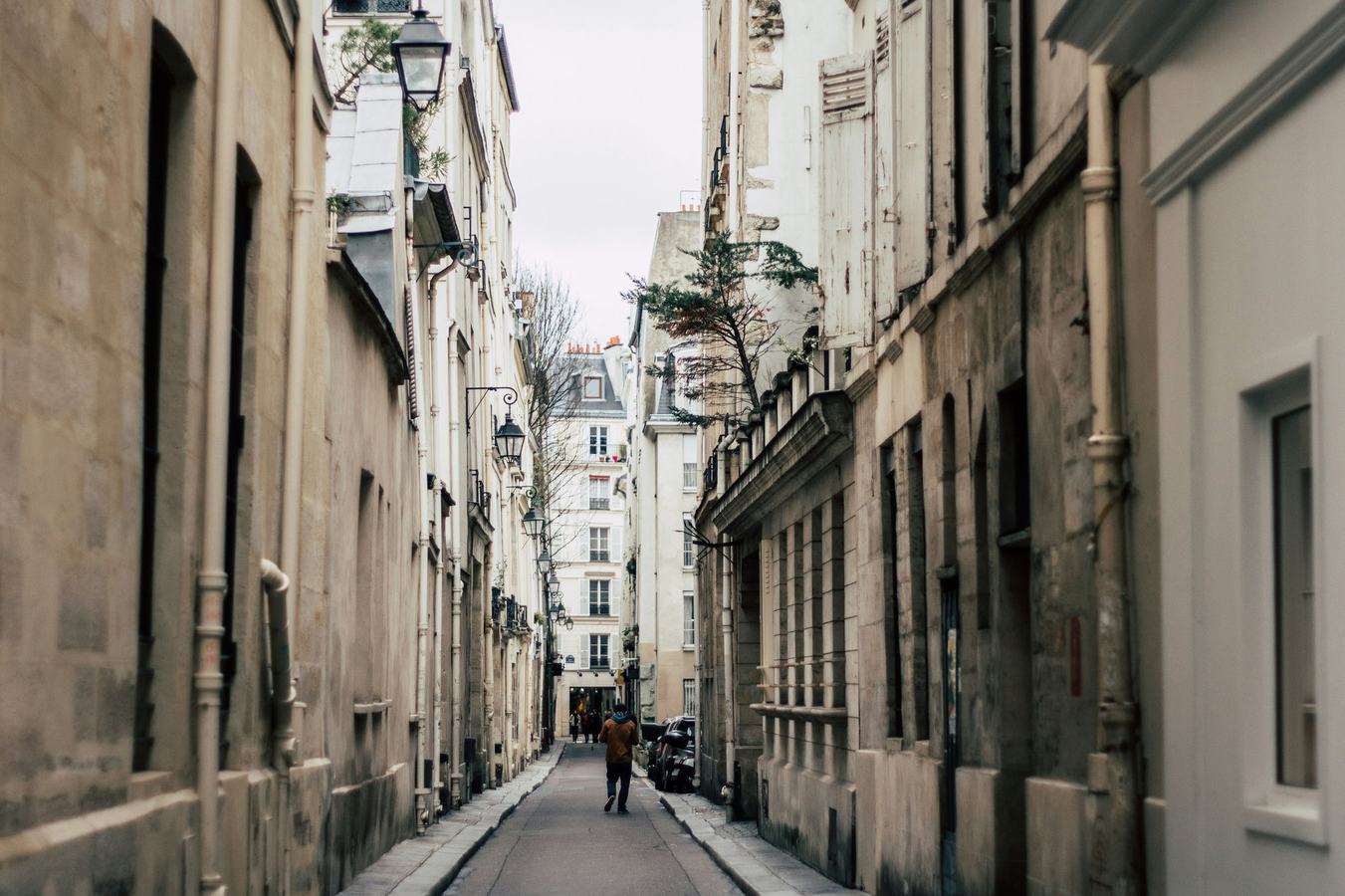
Because Paris survived almost intact, which is rare — so the streets themselves are the witnesses. I didn't want to point at monuments. I wanted people to look at an ordinary window, an ordinary doorway, and suddenly imagine the life that unfolded there. That shift, from looking to imagining, is the whole walk.
How did you decide where to begin and end?
That took the longest, and it's the part I keep to myself — the sequence is what makes the emotion build. What I can say is that I wanted to start with the loss of something, and end with life returning. Not because the suffering is forgotten, but because people refused to stop living. That arc is the reason the walk exists.
The exact route, the stops and the stories that tie them together stay between us until we walk it — that's part of what makes it yours.